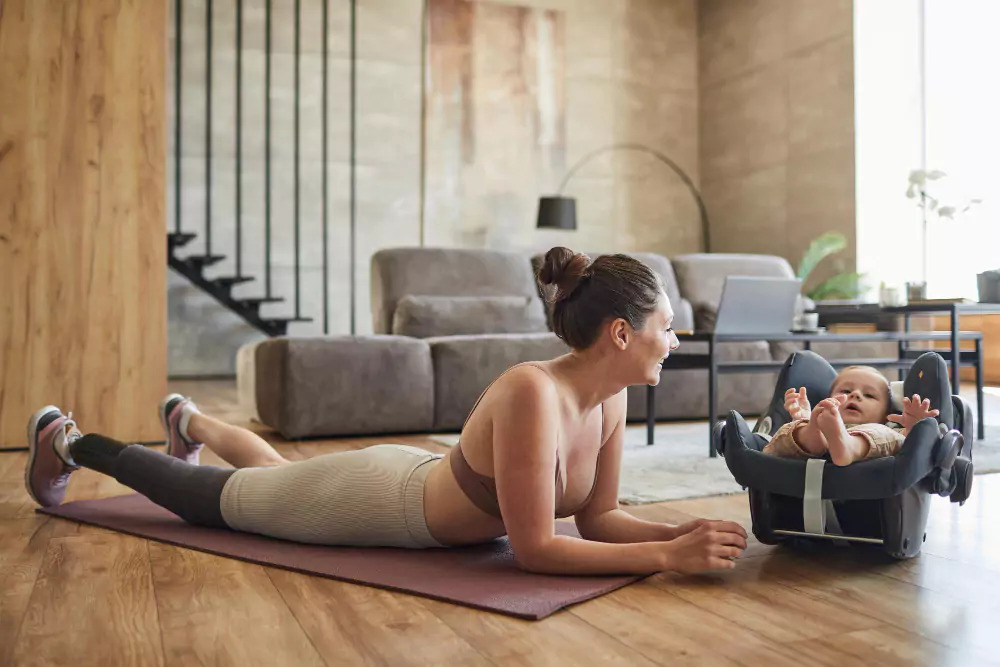
Postpartum fitness is essential for both physical and mental recovery after childbirth. Returning to fitness helps to rebuild strength, particularly in the core and pelvic floor muscles, which can be weakened during childbirth. Postpartum fitness exercises, such as pelvic floor strengthening and core recovery exercises, are key to restoring muscle tone and improving posture. This recovery is crucial for supporting the back and preventing incontinence.
Exercise after childbirth has significant mental health benefits. It boosts mood by releasing endorphins, helping to reduce anxiety and combat postpartum depression. Regular physical activity also plays an important role in increasing energy levels, which can help reduce postpartum fatigue, a common challenge for new mothers. Furthermore, engaging in post-birth exercises helps improve sleep quality, providing much-needed rest to cope with the demands of a newborn.
When to Start Exercising After Birth: Understanding Your Body’s Needs
The timing of postpartum exercise depends on your type of birth and how your body is recovering. It’s essential to wait for clearance from a healthcare provider, typically after the 6-week postnatal check-up, before engaging in more intense activities. For those recovering from a C-section or complicated birth, gradual exercises are crucial as the healing process may take longer.
In the early postpartum period, focus on gentle exercises like walking and pelvic floor exercises. Pay attention to your body’s signals. If you experience pain, bleeding (lochia), or discomfort, it’s important to rest. Avoid starting intense exercise until bleeding has decreased and you feel comfortable moving.
Remember to listen to your body and progress gradually. The need for rest is vital in the early weeks. Once cleared by your healthcare provider, you can start slowly increasing intensity with low-impact exercises like swimming or yoga.
Core Strengthening Exercises: Rebuilding Your Pelvic Floor and Abdominal Muscles
Rebuilding pelvic floor and abdominal strength after childbirth is essential for overall recovery. The following exercises target these key areas, helping to restore stability and support:
- Pelvic Floor Exercises (Kegels):
- Strengthen the pelvic floor muscles to prevent incontinence and improve pelvic health.
- Involve contracting and relaxing the muscles used to stop urine flow.
- Can be done in various positions, ensuring flexibility and ease.
- Abdominal Muscle Recovery (Diastasis Recti):
- Focus on safe exercises to address the separation of the abdominal muscles.
- Pelvic tilts and glute bridges engage the abdominal and lower back muscles, aiding in the recovery process.
- Core Strengthening Exercises:
- Pelvic Tilts: Engage the lower back and abdominal muscles to support the pelvic floor.
- Bridge Lifts: Strengthen the glutes and lower back while providing stability to the pelvic floor.
- Progressing to More Advanced Exercises:
- Modified Planks and Leg Raises: Once your body is ready, gradually incorporate more challenging exercises to build core strength.
- Start slowly and increase intensity as your strength improves.
Gentle Postpartum Exercises to Start With
When starting postpartum recovery, gentle exercises can help ease you back into fitness while improving overall well-being. Key exercises include:
- Walking: The simplest and most effective exercise to ease back into fitness. Begin with short walks and gradually increase the time and intensity to improve cardiovascular health and mood.
- Postpartum Yoga: Gentle stretching, breathing, and relaxation exercises help improve flexibility, reduce stress, and support the recovery process. Incorporate deep breathing to enhance relaxation.
- Pelvic Floor and Posture Exercises: Focus on core stability and posture, with exercises like pelvic tilts and Kegels. Strengthening your pelvic floor helps support bladder control and improve overall pelvic health.
- Guided Breathing: Incorporate diaphragmatic breathing to improve oxygen flow and relaxation, supporting both your pelvic floor and core muscles.
Important Considerations:
- Gradually progress in intensity and duration based on how your body feels.
- Always listen to your body and consult a healthcare provider before starting a new exercise routine.
Rebuilding Stamina: Low-Impact Cardiovascular Exercise
Low-impact cardiovascular exercises are ideal for rebuilding stamina and improving fitness while being gentle on the joints. These exercises maintain your heart rate without causing stress on your body, making them perfect for postpartum recovery. Here are some great options:
- Walking: A simple and effective way to boost endurance. Start with short walks and gradually increase the time and intensity.
- Cycling: Whether outdoors or on a stationary bike, cycling provides a great workout for the cardiovascular system while being easy on the knees and ankles.
- Swimming: This full-body workout builds stamina without putting strain on the joints. It’s ideal for a gentle yet effective cardiovascular challenge.
- Rowing: Engages multiple muscle groups, providing a solid cardio workout while protecting the joints.
- Elliptical Training: A low-impact alternative to running, offering a smooth workout that can be adjusted to different intensities.
Benefits of Low-Impact Cardio:
- Improves cardiovascular health and builds endurance.
- Gentle on the joints, making it suitable for those with joint pain.
- Supports weight management and improves mental health.
Tips for Stamina Building:
- Start slowly and gradually increase intensity.
- Stay consistent and combine with strength training for optimal results.
- Listen to your body and stay hydrated.
Strength Training: When to Start and Which Exercises to Focus On
Strength training is an essential part of postpartum fitness, but it’s important to start gradually and with proper form. For beginners, focus on mastering technique with lighter weights before progressing to heavier loads. This approach ensures a solid foundation and reduces the risk of injury.
- When to Start:
Begin strength training once cleared by your healthcare provider, typically after the 6-week postpartum check-up. Always consult a certified trainer for guidance, especially if you have any underlying health conditions. - Recommended Exercises for Beginners:
- Full-body Workouts: These workouts engage all major muscle groups, providing balanced strength.
- Compound Exercises: Focus on exercises like squats, deadlifts, bench presses, and overhead presses to target multiple muscle groups simultaneously.
- Bodyweight Exercises: Start with simple bodyweight exercises such as push-ups, lunges, and planks.
- Key Tips:
- Gradually increase weight, reps, or sets.
- Focus on proper form to avoid injury.
- Ensure adequate rest between workouts to allow muscles to recover.
Flexibility and Stretching: Enhancing Recovery and Mobility
Flexibility and stretching are crucial for improving joint health, mobility, and muscle function, especially in areas like the hips, shoulders, and lower back. Regular stretching enhances range of motion, reduces stiffness, and promotes blood flow, which supports quicker recovery and injury prevention.
- Benefits:
- Restoring Flexibility and Mobility: Stretching helps restore flexibility, particularly in the hips, shoulders, and lower back, making daily activities easier and reducing discomfort.
- Postpartum Yoga: Emphasising flexibility and relaxation, postpartum yoga is excellent for reducing tension from carrying the baby and improving overall flexibility.
- Stretching Routines: Incorporating gentle stretches into your daily routine can help reduce stiffness and ease muscle tension, especially in the postpartum period.
- Types of Stretching:
- Static Stretching: Hold each stretch for 15-30 seconds to improve flexibility.
- Dynamic Stretching: Incorporate dynamic movements into your warm-up to prepare your muscles for activity.
- PNF Stretching: Partner-assisted stretches to enhance flexibility.
Tips:
Warm up before stretching, listen to your body, and stay consistent. If you have any injuries, consult a healthcare provider before starting a routine.
Advanced Postpartum Exercises: Building Strength and Endurance
Advanced postpartum exercises help rebuild strength, improve endurance, and restore fitness after childbirth. These exercises focus on core stability, pelvic floor health, and overall body strength, gradually increasing in intensity as recovery progresses.
- Core Strengthening:
- Plank Variations: Progress from forearm to full planks, holding for increasing durations to strengthen the core.
- Bird-Dog: Engage core and glutes while extending the opposite arm and leg, promoting balance and stability.
- Deadlifts and Squats: Incorporate light weights or even use your baby for added resistance in functional movements.
- Glute Bridges: Target glutes and core muscles, progressing to single-leg variations for added challenge.
- Building Stamina and Intensity:
- Running: Transition gradually from walking to running, ensuring proper pelvic support and increasing distance over time.
- Higher Intensity Workouts: Include interval training, weightlifting, and more complex yoga poses to challenge the body.
- Sports: Once fully recovered, consider returning to preferred sports or activities, focusing on a gradual return to avoid injury.
- Tracking Progress:
- Use fitness apps or journals to monitor progress, stay motivated, and ensure safe progression.
When to Seek Professional Help: Avoiding Injury and Managing Setbacks
Seeking professional help during postpartum recovery can significantly reduce the risk of long-term injury and speed up healing. It’s important to recognise when symptoms require attention, ensuring safe progression and recovery.
- The Role of a Postpartum Fitness Coach or Physiotherapist: A postpartum fitness coach or physiotherapist can help create a tailored fitness plan suited to your recovery stage, ensuring safe exercises and appropriate progressions.
- Severe Pain or Injury: Intense pain, swelling, or difficulty using an injured area warrants immediate professional evaluation.
- Persistent Symptoms: If pain or discomfort persists beyond a few days, or worsens despite rest, professional guidance is necessary.
- Medical Clearance: Before resuming high-intensity workouts, seek medical clearance, particularly if you’re experiencing complications like pelvic pain or incontinence.
- Recognising Setbacks: If discomfort or pain occurs during exercise, scale back or modify your routine. Don’t push through pain; listen to your body to prevent further injury.
- Signs of Injury: If you notice unusual symptoms such as numbness or weakness, consult a healthcare provider to adjust your fitness plan accordingly.
Managing Setbacks:
- Acknowledge emotional challenges, and focus on small, achievable goals.
- Stay flexible with your recovery plan and seek support from healthcare professionals, friends, and family.
Final Thoughts
Rebuilding fitness after childbirth is a unique journey for every new mum, and it's crucial to embrace it with patience and consistency. Celebrate small milestones along the way, as each step forward is a victory in your postpartum recovery.
Focusing on daily, manageable workouts will lead to long-term results. Start with gentle exercises, gradually progressing to more challenging routines as your strength improves.
Remind yourself that every recovery journey is different, and it’s okay to progress at your own pace. Whether you’re rebuilding core strength or improving pelvic floor health, listen to your body, and don’t rush the process. With the right support, such as guidance from a postpartum fitness coach or physiotherapist, you can build a solid foundation for long-term fitness and well-being.
Frequently Asked Questions (FAQs)
How to reintroduce exercise postpartum?
Start with gentle exercises like walking and pelvic floor exercises, gradually increasing intensity as your body recovers. Focus on core strengthening and mobility before progressing to more challenging activities.
How long does it take to get back in shape after postpartum?
Recovery time varies, but it typically takes several months to regain pre-pregnancy fitness levels. Patience, consistency, and listening to your body are key.
How soon can you return to exercise after birth?
Most women can start light exercise, like walking and pelvic floor exercises, within a few days after birth. Intense exercise should wait until after the 6-week check-up, with clearance from a healthcare provider.